
Industrial facilities depend on durable equipment, structurally sound components, and reliable machinery to keep operations running efficiently. When metal components become damaged, existing structures require modification, or custom equipment needs to be manufactured, professional welding and fabrication services play an essential role in maintaining productivity. For businesses seeking welding fabrication in Rockford, choosing an experienced industrial service provider can help improve equipment reliability, minimize downtime, and support long-term operational performance.
At Midwest Millwright Services Inc., we understand that the heart of your industrial operations lies in the efficiency of your machinery. As seasoned millwrights, we are dedicated to ensuring that your equipment operates at peak performance, minimizing downtime and maximizing productivity. This commitment to operational efficiency guides our approach to industrial machinery support and related services.
Understanding Industrial Welding and Fabrication
Welding and fabrication are fundamental processes in industrial maintenance, equipment installation, machinery repair, and custom manufacturing. Although closely related, each serves a distinct purpose in creating and maintaining reliable industrial systems.
Welding joins metal components through the application of heat, pressure, or a combination of both. Depending on the materials, design requirements, and operating environment, industrial welding may involve gas metal arc welding (GMAW), gas tungsten arc welding (GTAW), or shielded metal arc welding (SMAW).
Metal fabrication encompasses a broader range of processes used to manufacture, modify, or repair metal components. These processes may include cutting, bending, forming, fitting, and welding to produce parts that meet specific dimensional and structural requirements.
For manufacturers and industrial facilities in Rockford, combining welding and fabrication expertise provides practical solutions for equipment repairs, structural modifications, custom metalwork, and machinery support.
Benefits of Professional Welding Fabrication in Rockford
Industrial equipment operates under demanding conditions. Repeated mechanical stress, vibration, friction, heat, and exposure to corrosive environments can gradually weaken components and affect performance. Professional welding and fabrication help address these challenges while supporting the continued operation of essential machinery.
- Industrial Equipment Repair and Restoration
Damaged or worn metal components can compromise production equipment and create unexpected maintenance requirements. Depending on the type and extent of the damage, welding and fabrication may restore components, reinforce weakened areas, or produce replacement parts.
Professional repair begins with evaluating the component, identifying the source of the damage, and determining whether repair is technically appropriate. Material composition, loading conditions, fatigue, and dimensional tolerances must all be considered before work begins.
Addressing component failures promptly can reduce the risk of secondary damage and avoid unnecessary equipment replacement when a safe, effective repair is possible.
- Custom Metal Fabrication for Industrial Applications
Standard replacement parts do not always meet the specific requirements of industrial machinery. Custom metal fabrication provides a way to produce components designed around existing equipment, facility layouts, and operational demands.
Fabricated components may include mounting brackets, equipment supports, machine guards, frames, reinforcement plates, and specialized metal assemblies. Accurate measurements, appropriate material selection, and precise fabrication help ensure that each component fits properly and performs as intended.
For facilities with specialized machinery or unique production requirements, custom fabrication can improve equipment compatibility and provide greater flexibility when modifying existing systems.
- Structural Reinforcement and Equipment Modification
Industrial facilities frequently require modifications to support equipment upgrades, changes in production processes, or adjustments to machinery layouts. Welding and fabrication can support these projects by reinforcing metal structures, modifying equipment frames, and producing components needed for new installations.
Structural work requires careful attention to load capacity, joint configuration, material properties, and applicable engineering requirements. Weld quality and dimensional accuracy are especially important when fabricated components support heavy machinery or experience repeated dynamic loads.
Working with qualified professionals helps ensure that modifications suit the intended application without compromising the integrity of existing equipment or structures.
- Reduced Equipment Downtime
Unplanned downtime can disrupt production schedules, increase maintenance costs, and affect delivery commitments. Timely welding and fabrication services help industrial facilities respond to equipment problems and complete necessary modifications more efficiently.
A coordinated repair process typically includes evaluating the problem, identifying the required materials and equipment, preparing the work area, performing the necessary welding or fabrication, and inspecting the completed work.
When these activities are planned alongside broader maintenance requirements, businesses can reduce avoidable delays and return equipment to service as efficiently as conditions allow.
Common Industrial Welding and Fabrication Applications
Welding fabrication in Rockford supports a wide range of industrial applications, particularly in manufacturing environments where equipment reliability and component durability are essential.
Common applications include:
- Machinery repair: Repairing suitable metal components and addressing damage that affects equipment operation.
- Equipment modifications: Altering existing machinery to accommodate changing production requirements.
- Custom metal components: Fabricating brackets, supports, frames, plates, and other application-specific parts.
- Industrial installations: Producing or modifying metal components required during equipment placement and installation.
- Preventive maintenance: Addressing identified wear, cracks, or structural concerns before they contribute to more extensive failures.
- Component reinforcement: Strengthening suitable assemblies to meet verified operating requirements.
- Equipment upgrades: Supporting machinery improvements through customized metalwork and fabrication.
The appropriate solution depends on the equipment design, material specifications, operating environment, and intended service life of the finished component.
The Importance of Welding Quality and Material Selection
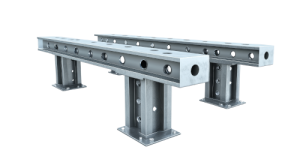 The quality of a welded assembly depends on more than the appearance of the finished weld. Proper material preparation, welding procedures, joint design, and inspection all contribute to the strength and reliability of the completed work.
Selecting the Right Welding Process
Different welding processes offer distinct advantages depending on material thickness, joint geometry, production requirements, and working conditions.
GMAW is commonly used for efficient welding across many industrial fabrication applications. GTAW offers precise control for applications requiring carefully controlled welds, while SMAW can be useful for maintenance and repair work in various field conditions.
Selecting the correct process helps achieve the required weld characteristics while accounting for productivity, accessibility, and quality requirements.
Choosing Appropriate Materials
Material selection directly affects the performance and durability of fabricated components. Carbon steel, stainless steel, and aluminum each have different mechanical properties, corrosion resistance characteristics, and welding considerations.
The selected material should be compatible with the component’s intended function, expected loads, temperature exposure, and surrounding environment. Inappropriate material selection or incompatible welding procedures can contribute to distortion, cracking, corrosion, or premature failure.
Inspection and Quality Control
Inspection helps verify that completed welding and fabrication work meets applicable project requirements. Depending on the application, inspection may include visual examination, dimensional checks, and nondestructive testing methods such as liquid penetrant, magnetic particle, ultrasonic, or radiographic testing.
Not every project requires the same inspection methods. The appropriate approach depends on the component’s function, governing codes, engineering specifications, and consequences of failure.
For critical industrial applications, following applicable welding procedures and quality requirements is essential to achieving dependable results.
How Welding Fabrication Supports Industrial Maintenance
Welding and fabrication are particularly valuable when integrated into a comprehensive industrial maintenance strategy. Rather than treating every equipment issue as an isolated repair, maintenance teams can evaluate how component condition, machine alignment, structural integrity, and operating conditions influence overall performance.
For example, a damaged equipment support may result from fatigue, excessive vibration, misalignment, or repeated loading. Repairing the visible damage without addressing the underlying cause may lead to another failure.
A more effective approach considers the component’s condition, the reason for the damage, and any related mechanical issues. Depending on the project, coordination between welding professionals and experienced millwrights can help identify concerns that affect equipment installation, alignment, and long-term reliability.
Integrating these services into routine maintenance planning can also help facilities prioritize repairs, manage maintenance schedules, and reduce the likelihood of unexpected equipment interruptions.
Choosing a Welding Fabrication Company in Rockford
Selecting the right provider is an important step in ensuring that welding and fabrication work meets operational requirements. Industrial projects often involve specialized equipment, demanding service conditions, and tight production schedules, making experience and technical capability important considerations.
When evaluating a welding fabrication company in Rockford, consider the following factors:
Industrial experience: Look for a provider familiar with the equipment, materials, and working conditions relevant to your project.
Technical capabilities: Confirm that the provider can accommodate your component dimensions, material requirements, fabrication specifications, and installation needs.
Quality assurance: Ask about welding procedures, inspection practices, and how completed work is evaluated against project requirements.
Safety practices: Industrial welding involves hazards such as heat, sparks, fumes, and fire risks. Appropriate safety procedures and compliance with applicable requirements are essential.
Project coordination: For machinery repairs and industrial modifications, coordination with maintenance personnel, engineers, and millwrights can help reduce scheduling conflicts and improve project execution.
Long-term reliability: Consider whether the proposed solution addresses the underlying problem and supports the component’s expected service conditions rather than focusing exclusively on the immediate repair.
Evaluating these factors helps businesses identify services that align with their equipment requirements, maintenance objectives, and production priorities.
Industrial Welding and Fabrication Services in Rockford, IL
Rockford’s manufacturing and industrial businesses rely on equipment that can withstand demanding operating conditions. When machinery components require repair, equipment needs modification, or custom metalwork is necessary, dependable welding and fabrication can help keep operations moving.
A successful project starts with a clear understanding of the application. Identifying the problem, establishing dimensional and material requirements, and determining the appropriate repair or fabrication method can help prevent avoidable complications later in the process.
Businesses should also consider how welding and fabrication fit into broader equipment maintenance and installation plans. Coordinating these services with machinery repairs, equipment moves, and other millwright activities may help streamline projects and reduce unnecessary production interruptions.
With an emphasis on machinery performance, reliability, and productivity, Midwest Millwright Services Inc. understands the importance of practical industrial solutions that address equipment needs and support continued production.
Contact Midwest Millwright Services Inc. for Industrial Support
When searching for welding fabrication in Rockford, industrial businesses need solutions that account for equipment performance, component durability, and production requirements. Whether a project involves repairing damaged metal components, modifying existing machinery, or fabricating specialized parts, careful planning and sound technical practices are essential.
Midwest Millwright Services Inc. is committed to helping industrial operations maintain efficient, dependable machinery while minimizing downtime and maximizing productivity.
If your facility requires assistance with machinery repairs, equipment modifications, or related industrial services, contact Midwest Millwright Services Inc. to discuss your project requirements and determine the appropriate next steps.
Investing in dependable industrial support can help protect equipment, improve maintenance planning, and keep essential operations running efficiently.
